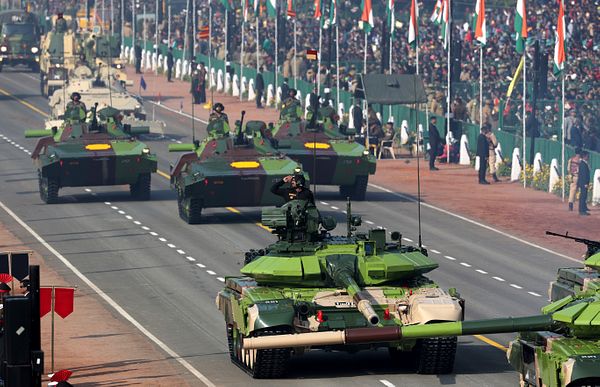
The global security environment is undergoing rapid transformation. Advances in military technology, shifting geopolitical rivalries, and the rise of hybrid warfare have fundamentally altered the nature of modern conflict. For India, these developments underscore the urgent need to accelerate defence modernization and strengthen its military capabilities in order to safeguard national security and maintain strategic stability.
As one of the world’s largest armed forces, India faces a complex security environment characterized by both traditional and emerging threats. From contested borders to evolving maritime challenges in the Indo-Pacific, India’s defence strategy must adapt to a rapidly changing strategic landscape.
The Evolution of Modern Warfare
Modern warfare is no longer defined solely by conventional military engagements between large armies. Instead, contemporary conflicts increasingly involve a combination of conventional forces, cyber operations, information warfare, space capabilities, and autonomous systems.
Technologies such as artificial intelligence, unmanned aerial systems, cyber capabilities, and precision-guided weapons are reshaping how wars are fought. These tools allow states to project power, gather intelligence, and conduct operations with greater speed and precision.
For military planners, this shift requires not only technological upgrades but also new doctrines, training frameworks, and operational strategies.
India’s Strategic Security Environment
India’s strategic environment presents a unique set of challenges. The country must maintain preparedness along its land borders while simultaneously expanding its maritime capabilities in the Indian Ocean and Indo-Pacific regions.
Border tensions, regional power competition, and evolving geopolitical dynamics have increased the importance of maintaining credible military deterrence. At the same time, India’s expanding economic interests and growing global engagement require a military capable of protecting strategic assets and trade routes beyond its immediate borders.
The dual challenge of land and maritime security places significant demands on India’s defence planning and resource allocation.
Key Areas of Defence Modernization
India’s defence modernization efforts have focused on several key areas aimed at strengthening military readiness and technological capability.
Indigenous Defence Production
One of the central objectives of India’s defence strategy is reducing dependence on foreign military imports by strengthening domestic defence manufacturing. Indigenous production of advanced military platforms not only enhances strategic autonomy but also contributes to technological innovation and industrial growth.
Programs focused on domestic production aim to build long-term capacity in areas such as aerospace, naval systems, missile technology, and advanced electronics.
Modernization of Armed Forces
India’s armed forces are undergoing modernization through the acquisition of advanced aircraft, naval vessels, surveillance systems, and missile platforms. These upgrades are intended to improve operational capabilities across multiple domains including land, sea, air, cyber, and space.
The modernization of command structures and joint military operations is also an important step toward improving coordination among the army, navy, and air force.
Emerging Defence Technologies
Future military competition will increasingly be shaped by emerging technologies. Artificial intelligence, robotics, quantum computing, and space-based systems are expected to play a critical role in next-generation defence capabilities.
Investing in research and development in these areas will allow India to maintain technological competitiveness and strengthen its long-term strategic position.
The Importance of Maritime Strategy
India’s growing focus on maritime security reflects the strategic importance of the Indian Ocean region. As global trade and energy flows increasingly pass through maritime routes, securing sea lanes and maritime infrastructure has become a critical priority.
Strengthening naval capabilities, enhancing maritime domain awareness, and expanding partnerships with regional powers are essential components of India’s maritime strategy.
The Indian Navy is expected to play an increasingly important role in safeguarding regional stability and protecting India’s economic interests.
Challenges in Defence Reform
Despite significant progress, India’s defence modernization efforts face several challenges. Budgetary constraints, bureaucratic complexities, and delays in procurement processes can slow the pace of military transformation.
Additionally, integrating advanced technologies into existing military structures requires careful planning and sustained investment in training and infrastructure.
Addressing these challenges will require institutional reforms, improved defence planning mechanisms, and stronger collaboration between government, industry, and research institutions.
Conclusion
Defence modernization is a strategic necessity for India in an era defined by rapid technological change and evolving geopolitical competition. Strengthening military capabilities, investing in emerging technologies, and promoting indigenous defence production will be critical for ensuring long-term national security.
As warfare continues to evolve, India’s ability to adapt its military strategy and technological capabilities will determine its capacity to protect national interests and contribute to regional stability in the decades ahead.